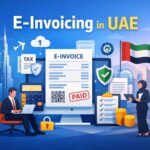

Businesses in the Digital E-Invoicing UAE are moving from paper and PDF invoices toward structured, government-aligned digital invoicing. This is not just a technology upgrade; it is a compliance shift tied to tax transparency, faster reporting, and standardized data exchange.
For companies already running on Microsoft Dynamics, the question is practical: how to make existing ERP workflows meet UAE e-invoicing and FTA requirements without disrupting operations. Done correctly, Dynamics can become the backbone of compliant, automated, audit-ready invoicing. Done poorly, it becomes a patchwork of manual fixes and risky workarounds.
When set up properly, Microsoft Dynamics supports compliant, automated, and audit-ready invoicing, but poor implementation leads to manual workarounds and compliance risk. As UAE regulations tighten and audit expectations rise, relying on manual invoicing is increasingly risky. ERP-driven automation is becoming the most reliable path to stay compliant and efficient.
Overview of Microsoft Dynamics E-Invoicing
Microsoft Dynamics (Business Central, Finance, or older NAV/AX environments) already handles:
- Customer master data
Stores standardized customer information like legal names, addresses, and tax IDs in one place. Clean master data ensures invoices are accurate and reduces compliance errors. - Tax configurations
Defines VAT rates, tax groups, and calculation rules within the system. Proper setup ensures taxes are calculated consistently and reported correctly. - Invoice creation
Generates sales invoices directly from orders or billing schedules. This reduces manual entry and keeps billing aligned with actual transactions. - Financial posting
Automatically records invoice values into the general ledger. This keeps financial statements and tax reports synchronized. - Reporting
Produces financial and tax reports from live ERP data. Reliable reporting supports management decisions and regulatory submissions.
E-invoicing builds on these functions by adding:
- Structured invoice formats
Converts invoices into standardized digital formats instead of free-text PDFs. This allows machine readability and regulatory validation. - Compliance logic
Applies rule checks for mandatory fields, tax details, and invoice structure. Errors are flagged early before they become compliance issues. - Integration layers for submission or validation
Connects Dynamics with external portals or compliance platforms. This enables smooth invoice validation or submission where required. - Archival rules
Enforces how invoices are stored and retained digitally. Proper archiving ensures records remain accessible and audit-ready.
The strength of Dynamics is that it centralizes financial data. The risk is that many implementations were never designed with e-invoicing regulations in mind. That gap must be closed deliberately.
Understanding UAE FTA Digital Invoice Standards
UAE Federal Tax Authority (FTA) frameworks emphasize accurate VAT handling, traceability, and proper documentation. While UAE e-invoicing is evolving toward broader digitization, current compliance expectations already require:
Core Invoice Elements
- Supplier TRN in Microsoft Dynamics UAE
In Microsoft Dynamics, the supplier TRN links every invoice to a registered tax entity. This is fundamental for UAE compliance and traceable e-Invoicing. - Accurate customer details for ERP E-Invoice Solutions
E-invoice solutions must store correct legal names, addresses, and TRNs. Clean data ensures valid E-invoicing and fewer compliance disputes. - Invoice date and number in E-Invoicing
E-invoicing requires a clear tax point and unique invoice ID. Structured numbering supports audit trails and regulatory reporting. - Detailed VAT breakdown for FTA Compliance
VAT must be split by rate and category, not shown as a lump sum. This transparency is critical for compliance reviews. - Total payable amount via e-invoicing
E-invoicing calculates and displays the final VAT-inclusive amount. This reduces disputes and keeps financial records aligned. - Clear tax classification in E-Invoice Solutions
Each item must be marked as standard, zero-rated, or exempt. Correct classification prevents VAT misreporting and penalties.
Digital Expectations
- System-generated Digital E-Invoicing
E-invoicing should originate directly from Microsoft Dynamics. System control reduces manipulation and improves consistency. - Consistent numbering under automated invoicing
E-invoicing enforces logical, gap-free sequences. Irregular numbering often signals compliance risk to auditors. - Proper retention in e-Invoice solutions
E-invoice solutions must store invoices securely for mandated periods. This ensures documents are available during audits. - Accessible audit trails for UAE Compliance
Every invoice action should be logged inside the system. This visibility supports compliance and accountability. - Accurate tax logic in Microsoft Dynamics UAE
Microsoft Dynamics should calculate VAT using configured rules. Automation minimizes human calculation errors.

Automating E-Invoice Generation & Submission
Automation is where compliance and efficiency meet.
What Automation Should Handle
- Auto-population of tax fields
- Invoice validation rules
- Format standardization
- Error detection before posting
- Batch generation
- Submission readiness
Practical Insight
Automation reduces human error but increases dependency on system logic. If your logic is wrong, mistakes scale faster. Testing is non-negotiable.
Real-World Expectation
Initial months involve:
- Rule tuning
- Exception handling
- Process refinement
- Staff retraining
Automation is not “plug-and-play.” It is “configure-and-government.”
Real-Time Invoice Tracking and Status Updates
Visibility matters as much as generation.
A mature Dynamics e-invoicing workflow allows:
- Status tracking
- Rejection identification
- Correction workflows
- Timestamped updates
- Submission logs
Without tracking, teams rely on guesswork and spreadsheets. That’s where compliance breaks down.
Operationally, finance teams gain:
- Faster dispute resolution
- Clear accountability
- Reduced reconciliation effort
Ensuring Audit-Ready Invoice Records
Audit readiness is a design choice, not a last-minute activity.
Audit-Ready Systems Provide
- Immutable invoice history
- Change logs
- Linked credit notes
- Document retention controls
- Quick retrieval
Common Weaknesses
- Manual document storage
- Scattered records
- Untracked revisions
- Missing supporting documents
An ERP-centric approach keeps the audit trail native to the system rather than fragmented across folders and emails.
Benefits of Dynamics for UAE Businesses
Operational Benefits
- Reduced manual work
Microsoft Dynamics enables e-invoicing that removes repetitive data entry and spreadsheet reliance. E-Invoicing streamlines billing so finance teams focus on review, not clerical work. - Fewer invoice disputes
E-Invoice Solutions generate standardized, system-validated invoices. This reduces errors and misunderstandings that typically trigger disputes. - Faster financial closing
E-invoicing posts transactions in real time within Microsoft Dynamics. This shortens month-end cycles and improves financial visibility. - Improved reporting accuracy
E-Invoicing pulls data directly from ERP records. This ensures reports reflect actual transactions, not manually corrected numbers.
Compliance Benefits
- Stronger VAT alignment
Microsoft Dynamics applies consistent VAT rules across transactions. This supports reliable compliance and accurate tax reporting. - Consistent documentation
E-Invoice Solutions standardize invoice formats and required fields. Consistency helps meet e-Invoicing and regulatory expectations. - Better audit preparedness
E-Invoicing creates traceable records and audit trails. This makes UAE Compliance reviews smoother and faster. - Lower penalty risk
E-invoicing reduces human mistakes in tax calculation and data entry. Fewer errors mean lower exposure to fines and corrections.
Strategic Benefits
- Scalable invoicing processes
Microsoft Dynamics UAE scales with business growth without adding manual workload. E-Invoice Solutions support higher volumes reliably. - Cleaner financial data
E-invoicing reduces duplicate or inconsistent entries. Clean data strengthens e-Invoicing accuracy and reporting. - Better decision-making inputs
Reliable ERP data gives leadership a clear financial picture. Decisions are based on facts, not assumptions. - Stronger governance
E-Invoice Solutions enforce standardized processes and controls. This supports long-term UAE FTA Compliance and accountability.
Case Study: Successful Dynamics E-Invoicing Implementation
A mid-sized UAE trading company running Dynamics faced:
- Frequent invoice corrections
- VAT inconsistencies
- Delayed reconciliations
- Audit anxiety
Approach Taken
- Cleaned tax configurations
- Standardized customer data
- Implemented validation rules
- Integrated a compliance-focused e-invoicing layer
- Trained finance staff
Results
- Significant reduction in errors
- Faster invoice cycles
- Stronger audit confidence
- Improved reporting clarity
The key success factor was not technology alone. It was process discipline.
FAQs
Is E-Invoicing mandatory in the UAE?
UAE rules are evolving toward structured e-Invoicing for stronger tax transparency. Even where not mandatory, UAE FTA Compliance expectations are steadily increasing.
Can Microsoft Dynamics UAE handle VAT rules?
Yes, Microsoft Dynamics UAE supports VAT when configured correctly with local tax rules. Proper setup ensures smoother compliance and reporting.
Do small businesses need ERP E-Invoice Solutions?
Not always at the start, but growth increases compliance risk. ERP E-Invoice Solutions and automated invoicing reduce manual errors over time.
How long does e-Invoicing implementation take?
It usually ranges from weeks to a few months. Timeline depends on data quality, customization, and Microsoft Dynamics UAE readiness.
What is the biggest risk in e-invoicing projects?
Weak setup and poor data governance create most failures. E-invoicing only works well when ERP data is clean and controlled.
Why Digital E-Invoicing Is Becoming a Business Essential in the UAE
E-invoicing in the UAE is no longer only about satisfying regulatory requirements; it is about building financial systems that are accurate, transparent, and resilient. When Microsoft Dynamics is configured and governed properly, it becomes a strong foundation for compliant, reliable invoicing. The businesses that benefit most treat e-invoicing as a financial control system, not just a billing tool.
As UAE compliance frameworks mature, structured ERP-based invoicing is shifting from advantage to necessity. Many UAE businesses accelerate this transition by working with specialized partners like Advintek, who focus on Dynamics-based e-invoicing aligned with local regulations. Organizations that build the right foundation now will adapt far more easily to what comes next.